Layered Salmon and Avocado Sushi Squares
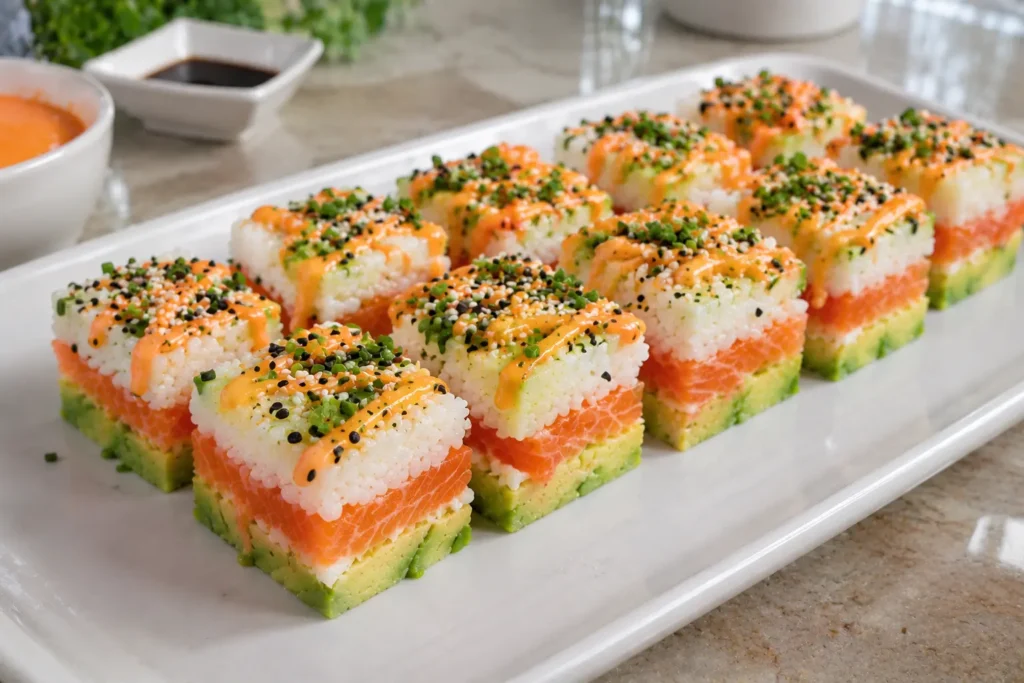
These layered salmon and avocado sushi squares turn classic sushi flavors into beautiful, bite-sized appetizers. Each piece combines tender salmon, seasoned sushi rice, creamy layers, and a colorful finish of sesame seeds, fresh chives, and spicy mayonnaise. Perfect for entertaining, these no-roll sushi bites look impressive and taste wonderfully fresh.
Categories: SNACKS
Ingredients
- 2 cups cooked and seasoned short-grain sushi rice
- 8 oz sashimi-grade salmon, thinly sliced
- 4 oz cream cheese, slightly softened
- 1 medium ripe avocado, peeled, pitted, and thinly sliced
- 1 teaspoon black sesame seeds
- 1 teaspoon white sesame seeds
- 2 tablespoons fresh chives, finely chopped
- 1/4 cup spicy mayonnaise
- 2 tablespoons soy sauce, for serving
Cooking Instructions
-
01
Line a 7-inch square mold or baking dish with food-safe plastic wrap, leaving enough overhang on all sides to cover the filling. Smooth the wrap against the bottom and corners to help create clean edges.
-
02
Spread the cooked, seasoned sushi rice evenly across the bottom of the mold. Using a lightly dampened spatula or the back of a spoon, press the rice firmly into a compact, level layer without crushing the individual grains.
-
03
Arrange the thin salmon slices edge-to-edge over the rice, slightly overlapping them where necessary. Cover the entire surface to create a continuous salmon layer with no large gaps.
-
04
Spoon the slightly softened cream cheese over the salmon. Carefully spread it into a smooth, even layer using a small offset spatula or the back of a spoon. Work gently to avoid shifting the salmon underneath.
-
05
Arrange the avocado slices in overlapping rows over the cream cheese. Gently press them into a uniform layer, filling any gaps to create an even surface.
-
06
Fold the overhanging plastic wrap over the avocado and press lightly to compact the layers. Refrigerate for 15 to 20 minutes to help the sushi hold its shape during cutting.
-
07
Place a flat cutting board over the mold and carefully invert it. Lift away the mold and gently remove the plastic wrap. The rice layer should now be facing upward, with the salmon, cream cheese, and avocado underneath.
-
08
Using a very sharp, slightly damp knife, cut the sushi slab into 16 evenly sized squares. Wipe the blade clean between cuts to maintain distinct layers and neat edges.
-
09
Arrange the sushi squares on a serving platter. Sprinkle the tops evenly with black and white sesame seeds, followed by the finely chopped fresh chives.
-
10
Drizzle the spicy mayonnaise over the sushi squares in thin zigzag lines. Serve immediately with soy sauce on the side, keeping the sushi chilled until ready to enjoy.
Chef notes
Use salmon specifically sourced and handled for raw consumption by a reputable seafood supplier. The term "sashimi-grade" alone does not guarantee safety. For clean, defined layers, use sushi rice that is sticky but not excessively wet. Allow freshly cooked rice to cool before assembling, without leaving it at room temperature for extended periods. Slightly soften the cream cheese for easier spreading, but avoid warming it excessively because the salmon must remain cold. Choose a ripe but firm avocado that holds its shape when sliced. Overripe avocado can become mushy and make the squares difficult to cut. Chilling the assembled sushi briefly before slicing helps the layers stay compact. Use a clean, damp knife for precise cuts. For a milder finish, replace spicy mayonnaise with regular Japanese-style mayonnaise. Sprinkle the toppings just before serving for the freshest presentation. These sushi squares are best eaten immediately. Keep refrigerated at 40 degrees F (4 degrees C) or below and avoid extended room-temperature storage. Do not serve raw salmon to people at increased risk from foodborne illness; cooked salmon is a safer alternative.